
Saturday, 16 April 2016
The 8 Facts About Ninja & Ninjutsu
Friday, 15 April 2016
Some Famous People and Their Relation to Ninjutsu
 |
| Hōzōin of Spear Technique |
Thursday, 31 March 2016
The 12 Misconceptions About Ninja & Ninjutsu
 |
| The popular representation of ninja has been vastly wrong, as in this example. |
Samurai vs Ninja
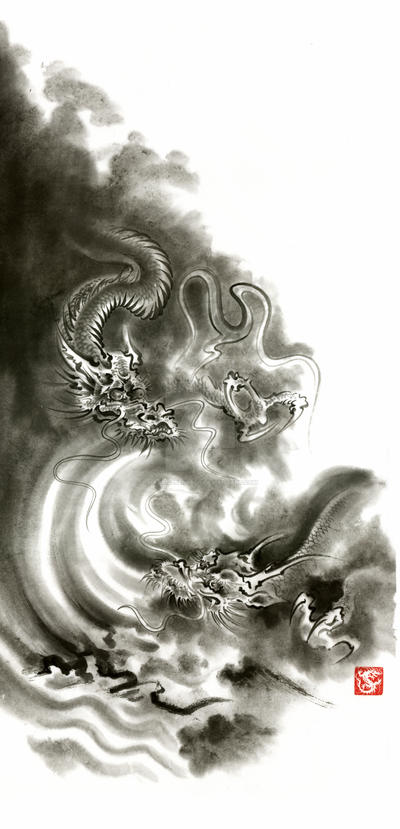 |
| The Dragon Spirits |
First let's give a short introduction of the two figures. Samurai, known more commonly in earlier Japan as Bushi or simply Bu, were the military officer class of warriors, known for their nobility, honor and bravery. They were strongly committed to their path of Samurai -Bushido which defined the basic principles of the way of samurai life. The spirit of a Bushi was like that of a pine tree -high, erect and strong, when it came to character. We can say that the spirit of a Samurai was like an Oni (demon) when it came to intention. They would get cut down rather than bend down before the will of an enemy, however they were readily available to submit their will before that of the person they were serving for. They were committed to their way of honor so much that they would commit seppuku (a ritual suicide) in case of a great loss rather than take the path of escape or imprisonment. Even if they were imprisoned during war or due to crime, the general path for them was to commit seppuku in order to release their soul from the strangles of worldly life.
Saturday, 20 February 2016
12 Basic Shinobi Principles
 |
| Like the Spirit Hidden Within a Young Bamboo |
These are not those principles we often call 18 principles or 18 disciplines rather they are like a set of rules like the code of Bushido that I had personally compiled and written a few years back, based on my own understanding of the 'way of Shinobi' and have no historical basis (specifically in an arranged order), though they were followed in some way by Shinobi of the old days and I found them to have been the base of Shinobi teachings and what I thought a person must follow to be deemed as a true Shinobi. These are circumstantial, meaning that the meaning of these may change based on the situation at present or may not be followed at all. It also depend on the type of Shinobi you are working on. I have tried to explain somewhat but most meanings of these can only be understood through word of mouth or practice. Here they are for a public reading but understanding of a few. I am presenting them almost the same as I had written them earlier.
The 12 basic shinobi principles:
1. Stealth: Nin/Shinobi literally means 'to hide'; ja means 'people'. so Ninja means 'hidden people'. Stealth is the most essential to be a ninja. He must at least not show his true intentions.
2. Silence: Silence is Golden. A ninja must know how to work his out through silence. He must know when to speak, when to keep silent and make his move. Internal silence is also important.
Saturday, 21 November 2015
History: Bujinkan part 2
Continued from the previous part...
3. Kumogakure-ryu Ninpō: Kumogakure: 'clouds-hidden village' is another school of ninpō. It is famous for its unique fiery masks and demon style techniques, used to scare the guts out of a person. The famous Sarutobi Sasuke is also said to be from this ryu. The Soké lineage is as:
Source: http://www.ninjutsu.com/
4. Shinden Fudo-ryu Dakentaijutsu: Literally meaning "Immovable Spirit School of Striking Free-body Techniques". Founded by Izumo Kanja Yoshiteru and based upon the teachings of Chinese Kempo Boxing. The Soké lineage is as:
3. Kumogakure-ryu Ninpō: Kumogakure: 'clouds-hidden village' is another school of ninpō. It is famous for its unique fiery masks and demon style techniques, used to scare the guts out of a person. The famous Sarutobi Sasuke is also said to be from this ryu. The Soké lineage is as:
 |
| Kumogakure-ryu Soké Lineage |
4. Shinden Fudo-ryu Dakentaijutsu: Literally meaning "Immovable Spirit School of Striking Free-body Techniques". Founded by Izumo Kanja Yoshiteru and based upon the teachings of Chinese Kempo Boxing. The Soké lineage is as:
History: Bujinkan part 1
 |
| Koto-ryu Koppojutsu (Tiger knocking-down bone-breaking technique) |
Subscribe to:
Posts (Atom)