Tuesday, 26 June 2018

An Autobiography of Takamatsu Sōke

the last ninja
Takamatsu Toshitsugu - The Last Shinobi
(Cover of the book by Wolfgang Ettig)
Disclaimer: The translation and wordings contained in this article, except this statement, does not belong to me and I do not take credit for them.

"My age will be 68, this year the 4lst year of Showa (1955). Until two or three years ago I had no idea of what my age was. This is simply because I did not want to know, however I do know that I was born in the 23rd year (note: possibly 22nd year) of Meiji (1889). I am bewildered by the appearance of my face as it looks now but the reason for this is: I have not looked at myself in the mirror in some thirty years. Even with this bedraggled look I am still what most people would consider an energetic man. If most people were to go for a walk for an hour they would usually cover about four miles - I usually cover that in about half of one hour. I like to walk and do so naturally with my dogs. We walk together everyday. I am very bad for time, but every day I am punctually in bed at 9 o'clock with my pet cat whom I have appointed the name of Jiro. I awake at half past six in the morning and take a cold friction wash. This is something that I have not missed in the past forty years and is why I have never been sick in bed; this is not to say cold washes alone stop you from being sick.

I enjoy painting very much and even now I continue painting as a form of play. I am not very skilful but I enjoy it, for me it's a pleasure. No one possesses the knowledge concerning the events of tomorrow; this means we do not know when our life will cease. Due to the impetuousness of youth I made lots of errors regarding my life; this was until the age of forty. I learned my mistakes and now take my cold washes and go for a walk with my dog every morning. After this I dedicate some time to writing and painting, as this is also balance. Exercise, rest, study and pleasure.

Monday, 8 May 2017

Introduction to Bujinkan Budō Taijutsu

Bujinkan Grandmaster Hatsumi Masaaki
   Previously, I had given you a short introduction to Bujinkan in my post Introduction: Bujinkan at the start of my blog. Indeed that was just for a total beginner or novice to let him/her understand what Bujinkan is and it was also my intention to define the purpose of this blog. Now going more towards the actual business, I am going to post in detail about the structure of the system of Bujinkan Budo Taijutsu i.e its fields, levels, ranks and training methods.
   'Bujinkan' consists of three sub-words: 'Bu' meaning 'warrior'; 'Jin' meaning 'Godly/divine' and 'Kan' meaning 'hall', hence it gives the complete meaning roughly as 'Divine Warriors' Hall'. Similarly in 'Budō', 'Bu' means warrior while 'dō' means 'way', hence, Budō simply means 'way of warrior' or 'martial way'; and in 'Taijutsu', 'Tai' roughly means 'free body' while 'Jutsu' means 'technique', hence, Taijutsu means 'free body techniques'. Now going further into the details, 'Bujinkan' is the name of the system or organization that has collected the arts of ninpō and bujutsu into one curriculum; 'Budō' is the name of martial system(s) in general, while, 'Taijutsu' is a branch or part of it which deals mostly with unarmed combat.
   So Bujinkan as a combination of arts from three ninpō ryū-ha and six bujutsu ryu-ha consists of 9 sub-systems, each from the specific ryū-ha. These are:

Friday, 21 October 2016

Ninjutsu and Islam

Dervish Warrior
   Ninjutsu made its origin earlier than Islam and is heavily influenced by the teachings from Bhuddism, Taoism and Confucianism. Islam is a Way of Virtue (and not only a religion) just like Bushido and it contains rulings on the proper behavior of the people who follow this way while ninjutsu is a set of deceptive techniques, from a general look. Thus it seems natural for analysts to assume that it (ninpō) may contain such teachings which are against the Shari'ah of Islam and thus practicing or performing ninjutsu may be Haraam (Unlawful) in Islam, especially when it contains such elements as Spying, Deception, Assassinations, Fighting, Spirituality aimed at gaining supernatural powers, Magic, Divination, Astronomy and Astrology. On the other hand, some ignorant will say that Islam allows everything in war. Both Islam and ninjutsu are heavily misunderstood not only by the 'outsiders' but also by the 'insiders' of them. Some of the misconceptions commonly found about ninjutsu have been already discussed in the post The 12 Misconceptions About Ninja & Ninjutsu. Clearing misconceptions about Islam and Jihad are out of the scope of this site.

Tuesday, 16 August 2016

Iga vs Koga Shinobi


Iga vs Koka Shinobi

   Shinobi existed throughout Japan but these two villages of Iga and Koka (now called Koga) gave birth to some of the history's most famous ninja including Hattori Hanzō, Fujibayashi Nagato, Momochi Sandayu, Fuma Kotaro and Natori Masatake. The reason noted is that the two regions were independent of the shogunate rule and didn't have a shugo (governor appointed by Shogun) to oversee them (if existed then only by name). Hence in these villages, respective clans formed alliance to have free rein and appoint their own leader by mutual consultation. Thus they were independent to form their own armies and strong fortresses as per way they wished.

Tuesday, 31 May 2016

Rokugu- The 6 Basic Shinobi Tools

A Good Example of the Use of Shinobi Tools
   Rokugu (lit. six tools) are the six basic Shinobi tools that are essential to the gear of ninja/shinobi. These are the tools that a shinobi must always carry on all of his/her missions, all of them. These tools help in many of the common situations a ninja faces. Although there exists variations and types between the tools of each school in their shape, color, material or extent, the basic form and use of them had been the same through all the schools and regions of shinobi like Iga, Koka, Togakure-ryu.
   Unfortunately, none of the weapons or tools, which are famously portrayed to be the essential gear of the ninja like ninja sword, shuriken, blow pipe, shinobi shozoku, smoke bombs e.t.c, makes it to this list of six essential shinobi tools other than the Kaginawa (hooked rope).


   The six basic shinobi tools (Rokugu) are:

1. Amigasa -straw hat: The amigasa is a straw hat used to cover face or to change appearance. Through it you can see other people but they can not see your face. When not using it, you can carry it on your back, however, it is more advisable to carry it on your chest.

Friday, 27 May 2016

Gokan- The 5 Types of Spies (Shinobi)

Oniwaban

   Go (Jap.) means 'five', kan (Chin.) means 'spy' -Gokan: five (types of) spies, also called Tókan or Wujián. These are the five types of spies discussed by Sun Tzu in the 13th Chapter of his book Bingfa- Art of War and are supposedly defined so since the time of Huángdi -Yellow Emperor of China. Master Natori Masatake also describes these five types of spies in his book Shoninki.

Thursday, 12 May 2016

Seishin- The Correct Mind

   Sei means 'Right'/'Correct'/'True' while Shin means 'inside'/'heart'/'mind'/'spirit'/'god'/'divine'. Thus it means 'Correct Spirit', 'Correct Heart' or 'Correct Mind' for its complete meaning in our context. It's the first and the most important principle of ninjutsu and hence the first step towards becoming a ninja is to develop 'Seishin' before you can go further.
   If you lack 'seishin', you differ no other than common people who can do similar tasks. All your techniques are useless if you don't have developed the 'Seishin' and you are not worthy of being called a ninja because all your techniques will then be for your personal purposes, desires and freewill.
   As Momochi Sandayu says, "Ninjutsu is not something which should be used for personal desires. It is something which should be used when no other choice is available, for the sake of one's country, for the sake of one's lord, or to escape personal danger.  If one deliberately uses it for the sake of personal desires, the techniques will indeed fail totally".

   Even if it's about escaping personal danger to save your life, you should do it so only because saving your own life may help you save ten more. If you save your own life at the cost of leaving ten more in danger then that is not some thing worth of a true shinobi, and a samurai.
   The practice of Seishin helps you be decisive and flexible in the most difficult times so you wouldn't have to think more on the situation. If you haven't kept your heart under the blade then you haven't fulfilled the true meaning of shinobi, which can be achieved by the use of Seishin and that's why it's so important. Not only in Shinobi traditions but the practice of Seishin first is the part of some Samurai Traditions too.

Friday, 22 April 2016

Modern Ninja?

modern ninja
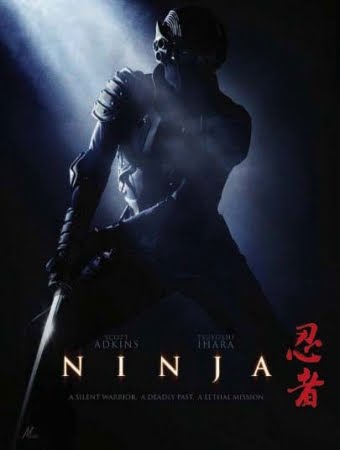
Cover of a movie with Modern Ninja Concept Used
    Related questions are: 'Can there be some one a modern ninja?'; 'How to be a modern ninja?'. The answer(s) can be simple or it may be difficult. In the olden days, it could have been simple but in the modern world it becomes quite difficult, to answer these questions, because of matters of authenticity. These questions depend a lot on reason, prior knowledge and perception. Whatever be the answers, we must first need to understand the concept of being a ninja and the art of ninjutsu. I have given a short introduction about ninja and ninjutsu in an earlier post Introduction: Ninja and Ninjutsu. Also I have discussed the base concept of being a ninja in my post What it takes to be a ninja?. To answer some modern (added some old too) misconceptions about ninja and ninjutsu, I have already put forward an article/post by the title The 12 Misconceptions About Ninja & Ninjutsu. Once you have read the above posts with an open mind and acceptance (it is the first step to understand something), you will then be able to provide a sufficient, reasonable answer for yourself. Below I provide some of my own views based on the subject matter.

Sunday, 17 April 2016

What it takes to be a ninja?

peace patience perseverance
Single Minded Perseverance
    It can be answered in three ways:
1. By using meanings
2. By using history
3. By way of skills and philosophy of ninjutsu

Saturday, 16 April 2016

The 8 Facts About Ninja & Ninjutsu

   Previously, we had discussed the common misconceptions found among people about the image of ninja and the art of ninjutsu in the post The 12 Misconceptions About Ninja & Ninjutsu. This post is about clarifying some truths, presenting some facts that people either do not already know or they do know but are in doubt if such things actually existed, about ninjutsu. Here are eight of such facts or truths, associated with ninja or ninjutsu:

Friday, 15 April 2016

Some Famous People and Their Relation to Ninjutsu

Hōzōin of Spear Technique
   There have been numerous people throughout history who have made names for themselves through their skills, wisdom or leadership. Since, our subject is mainly about ninjutsu I am not here to discuss their accomplishments but to briefly discuss the relation of few of those people who were famous and are more or less thought to have some connection to ninjutsu. Some of these were ninjas but still got fame and some are by much far not seen to have any connection to ninjutsu but they do have some, directly or indirectly. I will not name any daimyō or a commander of forces (in Japan) who have made use of the shinobi in peace or war times because Shinobi have been extensively used by almost all lords and most commanders, even Oda Nobunaga who destroyed the villages of Iga and Koka used them -in the battle of Iga (Iga no Ran) and at other occasions. He had named his shinobi named as Kyodan. Currently, I can only think of these eight of the most famous people having some connections to ninja or ninjutsu. I will add more once I can think of others.

Thursday, 31 March 2016

The 12 Misconceptions About Ninja & Ninjutsu

The popular representation of ninja has been vastly wrong, as in this example.
   Most people are probably unaware of most realities about Shinobi (a.k.a Ninja) and ninjutsu, probably because this art is so secretive and then distorted. By the popular portrayal, a ninja is shown as a creepy, heartless, shadowy figure that has no other purpose in life other than killing people for money or revenge, as mercilessly as could be. Some see ninjas as masters of several martial arts and call ninjutsu 'the mother of martial arts'. Using these misconceptions, many people are being mislead by self-proclaiming (fake) masters of ninjutsu, probably for private gains. This is a serious issue and hence in this post we point out those 12 greatest misconceptions which are commonly found against Ninja and then to defeat those claims or solve the misconceptions through evidence from history and the true teachings of the Shinobi.

Samurai vs Ninja

The Dragon Spirits
   This post is mostly about the relationship between the Samurai and Ninja, the two famous types of warriors in the history. In it we will also compare the path/ways or methods of the two, usually called Bushido and Shinobido, using references from the the books of Shoninki -one of the three great treasures on the knowledge of Shinobi by Natori Masazumi (Sok, and Hagakure -the book of Samurai by Yamamoto Tsunetomo. This post doesn't really discuss who is superior between Samurai and Ninja because that's a matter of situation.
   First let's give a short introduction of the two figures. Samurai, known more commonly in earlier Japan as Bushi or simply Bu, were the military officer class of warriors, known for their nobility, honor and bravery. They were strongly committed to their path of Samurai -Bushido which defined the basic principles of the way of samurai life. The spirit of a Bushi was like that of a pine tree -high, erect and strong, when it came to character. We can say that the spirit of a Samurai was like an Oni (demon) when it came to intention. They would get cut down rather than bend down before the will of an enemy, however they were readily available to submit their will before that of the person they were serving for. They were committed to their way of honor so much that they would commit seppuku (a ritual suicide) in case of a great loss rather than take the path of escape or imprisonment. Even if they were imprisoned during war or due to crime, the general path for them was to commit seppuku in order to release their soul from the strangles of worldly life.

Saturday, 20 February 2016

12 Basic Shinobi Principles

Like the Spirit Hidden Within a Young Bamboo
    These are not those principles we often call 18 principles or 18 disciplines rather they are like a set of rules like the code of Bushido that I had personally compiled and written a few years back, based on my own understanding of the 'way of Shinobi' and have no historical basis (specifically in an arranged order), though they were followed in some way by Shinobi of the old days and I found them to have been the base of Shinobi teachings and what I thought a person must follow to be deemed as a true Shinobi. These are circumstantial, meaning that the meaning of these may change based on the situation at present or may not be followed at all. It also depend on the type of Shinobi you are working on. I have tried to explain somewhat but most meanings of these can only be understood through word of mouth or practice. Here they are for a public reading but understanding of a few. I am presenting them almost the same as I had written them earlier.

The 12 basic shinobi principles:
1. Stealth: Nin/Shinobi literally means 'to hide'; ja means 'people'. so Ninja means 'hidden people'. Stealth is the most essential to be a ninja. He must at least not show his true intentions.

2. Silence: Silence is Golden. A ninja must know how to work his out through silence. He must know when to speak, when to keep silent and make his move. Internal silence is also important.

Saturday, 21 November 2015

History: Bujinkan part 2

Continued from the previous part...

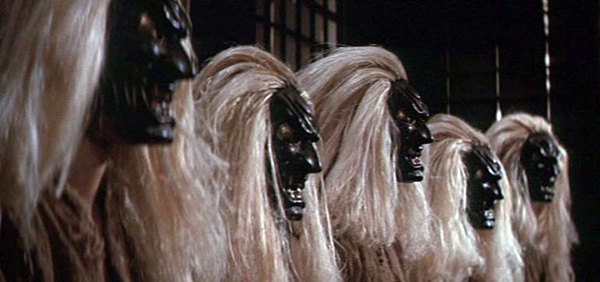
3. Kumogakure-ryu Ninpō: Kumogakure: 'clouds-hidden village' is another school of ninpō. It is famous for its unique fiery masks and demon style techniques, used to scare the guts out of a person. The famous Sarutobi Sasuke is also said to be from this ryu. The Soké lineage is as:

Kumogakure-ryu Soké Lineage
   Source: http://www.ninjutsu.com/

4. Shinden Fudo-ryu Dakentaijutsu: Literally meaning "Immovable Spirit School of Striking Free-body Techniques". Founded by Izumo Kanja Yoshiteru and based upon the teachings of Chinese Kempo Boxing. The Soké lineage is as:

History: Bujinkan part 1

Koto-ryu Koppojutsu (Tiger knocking-down bone-breaking technique)
   Bujinkan is not a single form of martial art. Rather it's a whole system of martial traditions based on teachings from 9 ryu-ha of budo and ninpó. Bujinkan is a collection of techniques from all these schools in an organization. Bujinkan Budo Taijutsu is the complete name for the system. It was founded by Hatsumi Masaaki (birth name: Yoshiaki) Soké so its history is directly linked to the life of Soké. The ryu-ha (old schools) themselves each have a distinct long history which complexly overlaps somewhere, so I can not discuss them in detail and then my knowledge ends at just Togakure-ryu. But first I want to write something about the life of Hatsumi Masaaki Soké and how he came to found Bujinkan.

Sunday, 15 November 2015

History: Ninjutsu

Himeji Castle, Himeji, Hyogo Prefecture, Japan
Himeji Castle, Hyogo Japan
   No one actually exactly knows about the true origin of Ninjutsu. There are several stories and folklores. Some say that Ninjutsu was taught to humans by a creature half human, half crow or goat like. Others relate similar stories. It is an art more than thousand years old to which very few written records exist; most of the art is transmitted orally. Then several things are lost and added through every transmission. Thus it's difficult to sail exactly over the true history of Ninja and Ninjutsu. The only way is to discover from whatever record exists. For this purpose, I will relate from several shinobi traditions here:

Friday, 13 November 2015

Introduction: Ninja and Ninjutsu

Kanji for Shinobi
Path of Endurance
  '忍者' is the Kanji used for 'Ninja' or 'Shinobi'. 'Ninja' is an Onyomi reading of this Kanji while 'Shinobi-mono' is its Kunyomi reading and is the more appropriate one. Although most people think that 'Ninja' is a newer term than 'Shinobi' and that it is something that people from the 20th century have came up with, it is only true to some extent. The truth is that Ninja is an older term; the first word used was simply 'Kan' (chinese: observer /spy). It transformed through many words such as 'Kansai' to 'Kanja' to finally become 'Ninja' upon its introduction to Japan. Though as the art developed in Japan, the term 'Shinobi' came to be used in common; 'Ninja' too was used but not in common. It again became commonly known as 'Ninja' in 20th century, used by Seiko Fujita who introduced most of the dying art to 20th century. This was easy for the Newer Outer World to adapt with and thus now you see 'Shinobi' rarely used.

   If you ask me how do I feel about the term '忍', I will say 'very wisely chosen by a person of High Enlightenment'. The ideogram '' (Nin or Shinobi: 'to Hide' or 'persevere') consists of '' (yaiba: blade) and '' (kokoro: heart) and thus form several meanings:

Thursday, 12 November 2015

Introduction: Bujinkan


Bujinkan Logo
Enlightenment Way of Warrior

   Bujinkan Budō Taijutsu (also commonly called as Ninjutsu or Ninpō Taijutsu) meaning "Divine Warrior Hall Martial Way of Free-body Techniques", is the ultimate art of self-defence in daily-life and war periods, developed by Hatsumi Masaaki Sōke (34th Grandmaster Tōgakure-Ryū Ninpō) by combining the essence of nine schools of Budo and Ninpō, which He has inherited from his great master who was once famed as Mongolian Tiger named Takamatsu Toshitsugu, who was the grandson of 32nd grandmaster of Togakure Toda Shinryūken.


   The nine schools (ryū-ha) consist of: