Thursday, 12 May 2016

Seishin- The Correct Mind

   Sei means 'Right'/'Correct'/'True' while Shin means 'inside'/'heart'/'mind'/'spirit'/'god'/'divine'. Thus it means 'Correct Spirit', 'Correct Heart' or 'Correct Mind' for its complete meaning in our context. It's the first and the most important principle of ninjutsu and hence the first step towards becoming a ninja is to develop 'Seishin' before you can go further.
   If you lack 'seishin', you differ no other than common people who can do similar tasks. All your techniques are useless if you don't have developed the 'Seishin' and you are not worthy of being called a ninja because all your techniques will then be for your personal purposes, desires and freewill.
   As Momochi Sandayu says, "Ninjutsu is not something which should be used for personal desires. It is something which should be used when no other choice is available, for the sake of one's country, for the sake of one's lord, or to escape personal danger.  If one deliberately uses it for the sake of personal desires, the techniques will indeed fail totally".

   Even if it's about escaping personal danger to save your life, you should do it so only because saving your own life may help you save ten more. If you save your own life at the cost of leaving ten more in danger then that is not some thing worth of a true shinobi, and a samurai.
   The practice of Seishin helps you be decisive and flexible in the most difficult times so you wouldn't have to think more on the situation. If you haven't kept your heart under the blade then you haven't fulfilled the true meaning of shinobi, which can be achieved by the use of Seishin and that's why it's so important. Not only in Shinobi traditions but the practice of Seishin first is the part of some Samurai Traditions too.
Friday, 22 April 2016

Modern Ninja?

modern ninja
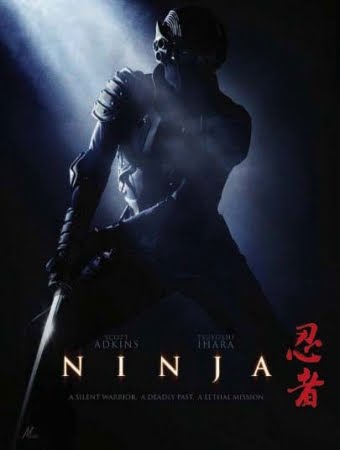
Cover of a movie with Modern Ninja Concept Used
    Related questions are: 'Can there be some one a modern ninja?'; 'How to be a modern ninja?'. The answer(s) can be simple or it may be difficult. In the olden days, it could have been simple but in the modern world it becomes quite difficult, to answer these questions, because of matters of authenticity. These questions depend a lot on reason, prior knowledge and perception. Whatever be the answers, we must first need to understand the concept of being a ninja and the art of ninjutsu. I have given a short introduction about ninja and ninjutsu in an earlier post Introduction: Ninja and Ninjutsu. Also I have discussed the base concept of being a ninja in my post What it takes to be a ninja?. To answer some modern (added some old too) misconceptions about ninja and ninjutsu, I have already put forward an article/post by the title The 12 Misconceptions About Ninja & Ninjutsu. Once you have read the above posts with an open mind and acceptance (it is the first step to understand something), you will then be able to provide a sufficient, reasonable answer for yourself. Below I provide some of my own views based on the subject matter.

Sunday, 17 April 2016

What it takes to be a ninja?

peace patience perseverance
Single Minded Perseverance
    It can be answered in three ways:
1. By using meanings
2. By using history
3. By way of skills and philosophy of ninjutsu

Saturday, 16 April 2016

The 8 Facts About Ninja & Ninjutsu

   Previously, we had discussed the common misconceptions found among people about the image of ninja and the art of ninjutsu in the post The 12 Misconceptions About Ninja & Ninjutsu. This post is about clarifying some truths, presenting some facts that people either do not already know or they do know but are in doubt if such things actually existed, about ninjutsu. Here are eight of such facts or truths, associated with ninja or ninjutsu:

Friday, 15 April 2016

Some Famous People and Their Relation to Ninjutsu

Hōzōin of Spear Technique
   There have been numerous people throughout history who have made names for themselves through their skills, wisdom or leadership. Since, our subject is mainly about ninjutsu I am not here to discuss their accomplishments but to briefly discuss the relation of few of those people who were famous and are more or less thought to have some connection to ninjutsu. Some of these were ninjas but still got fame and some are by much far not seen to have any connection to ninjutsu but they do have some, directly or indirectly. I will not name any daimyō or a commander of forces (in Japan) who have made use of the shinobi in peace or war times because Shinobi have been extensively used by almost all lords and most commanders, even Oda Nobunaga who destroyed the villages of Iga and Koka used them -in the battle of Iga (Iga no Ran) and at other occasions. He had named his shinobi named as Kyodan. Currently, I can only think of these eight of the most famous people having some connections to ninja or ninjutsu. I will add more once I can think of others.

Thursday, 31 March 2016

The 12 Misconceptions About Ninja & Ninjutsu

The popular representation of ninja has been vastly wrong, as in this example.
   Most people are probably unaware of most realities about Shinobi (a.k.a Ninja) and ninjutsu, probably because this art is so secretive and then distorted. By the popular portrayal, a ninja is shown as a creepy, heartless, shadowy figure that has no other purpose in life other than killing people for money or revenge, as mercilessly as could be. Some see ninjas as masters of several martial arts and call ninjutsu 'the mother of martial arts'. Using these misconceptions, many people are being mislead by self-proclaiming (fake) masters of ninjutsu, probably for private gains. This is a serious issue and hence in this post we point out those 12 greatest misconceptions which are commonly found against Ninja and then to defeat those claims or solve the misconceptions through evidence from history and the true teachings of the Shinobi.

Samurai vs Ninja

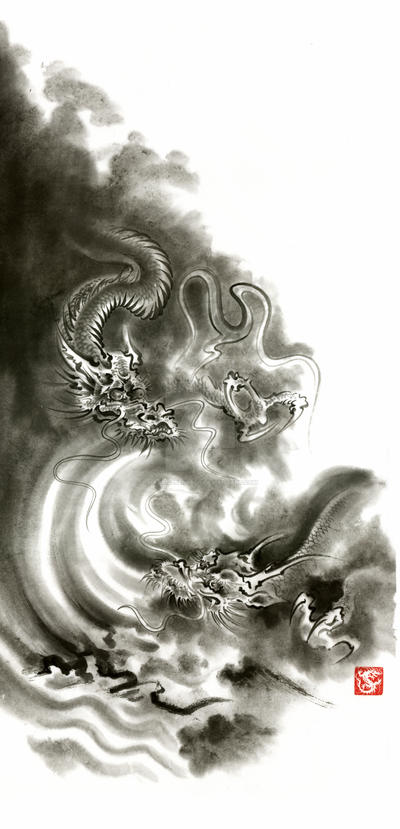
The Dragon Spirits
   This post is mostly about the relationship between the Samurai and Ninja, the two famous types of warriors in the history. In it we will also compare the path/ways or methods of the two, usually called Bushido and Shinobido, using references from the the books of Shoninki -one of the three great treasures on the knowledge of Shinobi by Natori Masazumi (Sok, and Hagakure -the book of Samurai by Yamamoto Tsunetomo. This post doesn't really discuss who is superior between Samurai and Ninja because that's a matter of situation.
   First let's give a short introduction of the two figures. Samurai, known more commonly in earlier Japan as Bushi or simply Bu, were the military officer class of warriors, known for their nobility, honor and bravery. They were strongly committed to their path of Samurai -Bushido which defined the basic principles of the way of samurai life. The spirit of a Bushi was like that of a pine tree -high, erect and strong, when it came to character. We can say that the spirit of a Samurai was like an Oni (demon) when it came to intention. They would get cut down rather than bend down before the will of an enemy, however they were readily available to submit their will before that of the person they were serving for. They were committed to their way of honor so much that they would commit seppuku (a ritual suicide) in case of a great loss rather than take the path of escape or imprisonment. Even if they were imprisoned during war or due to crime, the general path for them was to commit seppuku in order to release their soul from the strangles of worldly life.